Two eclipses. 27 years. Has work changed enough?
What were you doing the last time the skies went dark? I remember exactly where I was on 11 August 1999.
I was 28, working near Leicester Square for a start-up, for a man who, years later, would become my investor when I did my management buyout. Richard Hease, the ultimate male ally, although neither of us would have used that phrase back then.
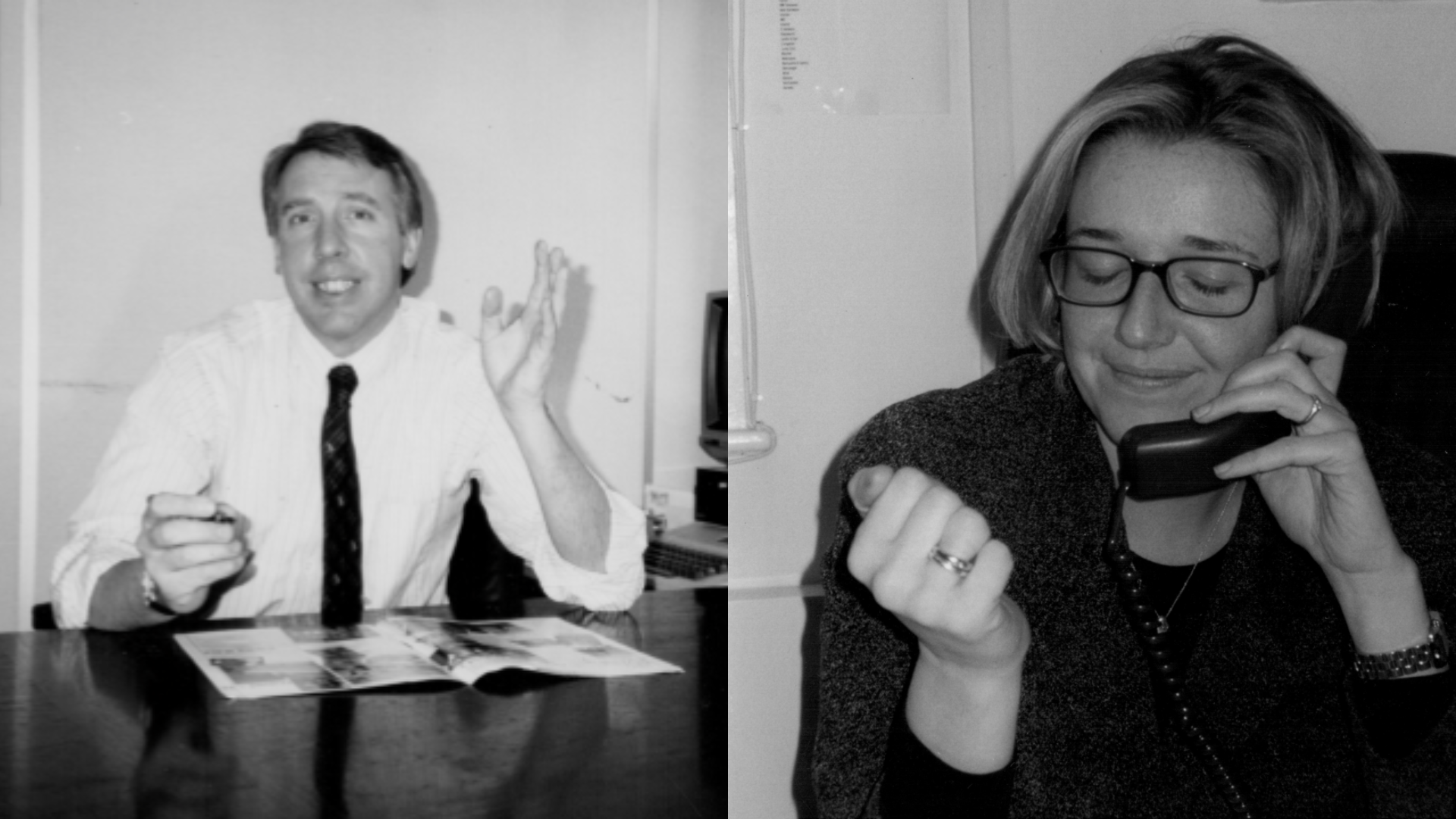
Richard Hease and I - circa 1999
That morning we trooped down to Trafalgar Square with thousands of others to watch the solar eclipse.
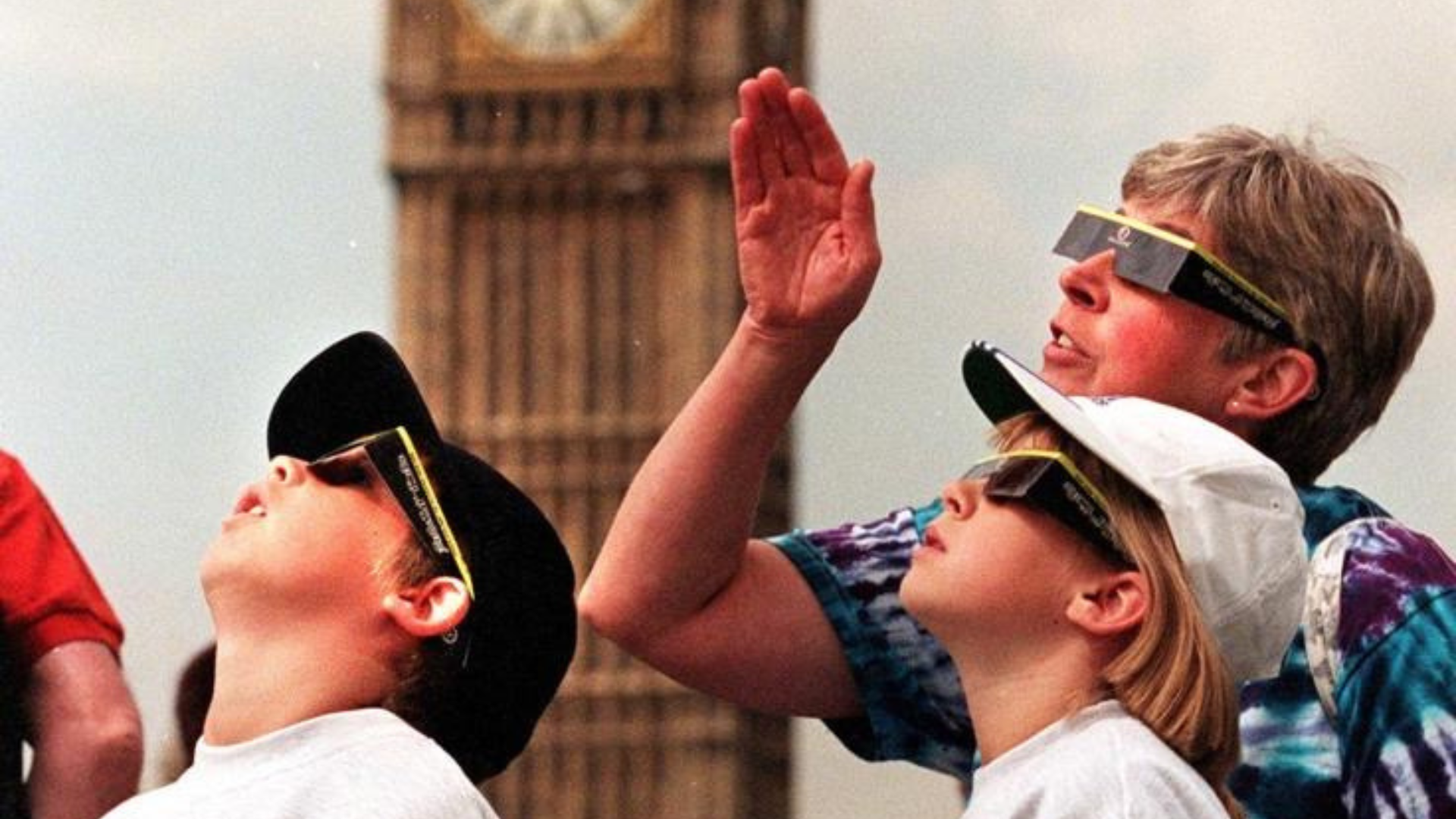
Random's in 1999!
Fast forward 27 years and here we are again. This time I’m spending August in Spain, and feeling rather lucky about it - Spain is apparently one of the best places in Europe to see this year’s eclipse.
I’m also working. But working looks rather different. I’m running my UK businesses from Spain, working around Spanish lunch breaks and, importantly, time with my family. In 1999, that would have been almost unthinkable. There was no Zoom. No Teams. No LinkedIn. No smartphone in your pocket. Google was barely a year old.
Some things have changed beyond recognition. Others have proved frustratingly persistent.
Pesky pay gaps, for one. Equal pay wasn’t new territory even then - the Equal Pay Act had been in force since 1975, 24 years before that eclipse - and yet the full-time gender pay gap at the end of the 1990s was around 17%. Today it’s 6.9%. Some of that progress has been structural, not just cultural: the right to request flexible working didn’t even exist until 2003, four years after that eclipse. Shared Parental Leave arrived in 2015, letting couples split leave and pay in a child’s first year. Gender pay gap reporting became mandatory for large employers in 2017, forcing a level of transparency that would have been unthinkable in 1999, when what you earned, and why, was nobody’s business but your employer’s.
That’s real progress. But 27 years is also a very long time to still be talking about a pay gap.
And perhaps the bigger story isn’t simply what has happened to women at work. It’s what has happened in women’s lives while we’ve been working.
I was 28 when I stood in Trafalgar Square. I’m 55 now. In between, I’ve had two children after a long fertility journey. I’ve bought a business and sold a business. I’ve started new ones. I’ve had successes and lots of failures. I’ve taken risks, made mistakes, picked myself up and started again. I’ve juggled work with babies and children, family and deadlines, caring and career. I’ve gone through menopause. And I’m still ambitious about what comes next.
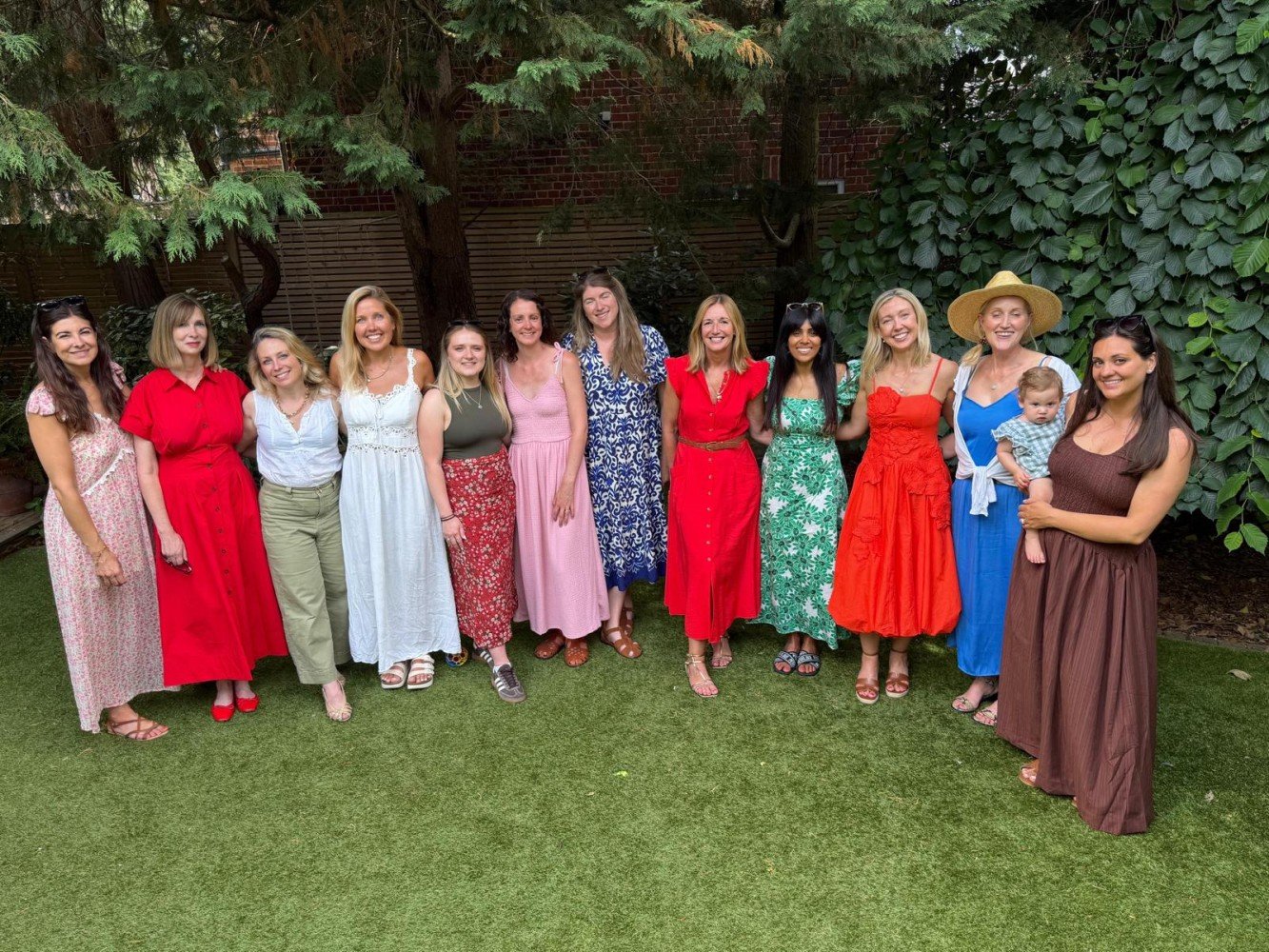
Women in Work team 2026
Because a woman’s working life isn’t a straight line. And increasingly, we’re beginning to understand the economic consequences when work is designed as though it is.
Take motherhood. ONS analysis found that five years after having a first child, mothers’ monthly earnings were on average 42% lower than they otherwise would have been - more than £65,000 in lost earnings over those first five years.
Then there’s childcare, one of the fundamental pieces of infrastructure that enables parents, and disproportionately women, to work. Costs have risen sharply since the turn of the millennium, far outpacing inflation. Government-funded hours are now making a real difference for many families - but the underlying cost pressure hasn’t gone away.
And while all of that was happening, more and more women were entering the workforce. We have made progress not only in how many women work, but in what we’re prepared to talk about when they get there. Fertility. Pregnancy loss. Menopause. Caring. Flexible working. The motherhood penalty. In 1999, so much of this was simply life you dealt with privately and tried very hard not to bring into the office. Today, finally, these are becoming workplace conversations.
But talking about something and fixing it are two very different things.
There’s one statistic that really brings that home for me. For women aged 22 to 29 today, the full-time gender pay gap is just 0.9%. By 40 to 49, it’s 9.1%. By 50 to 59, it’s 12.5%.
We enter work close to equal. Somewhere along the journey, we lose ground. Children, caring, time out, part-time work, health, opportunity, promotion, and the accumulation of a thousand small decisions all play their part.
Which brings me back to that 28-year-old woman standing in Trafalgar Square.
If you were in your twenties or thirties watching the eclipse in 1999, count forward. You’ll have your own working life mapped out in the space between then and now. Perhaps children. Perhaps no children. Career changes. Caring. Redundancy. Promotions. Illness. Successes. Failures. Reinvention. Life.
That, for me, is what Women in Work is increasingly about. Not simply getting women into work. But making work work for women across an entire lifetime. From our first pay cheque to our final one. From our 20s to our 80s.
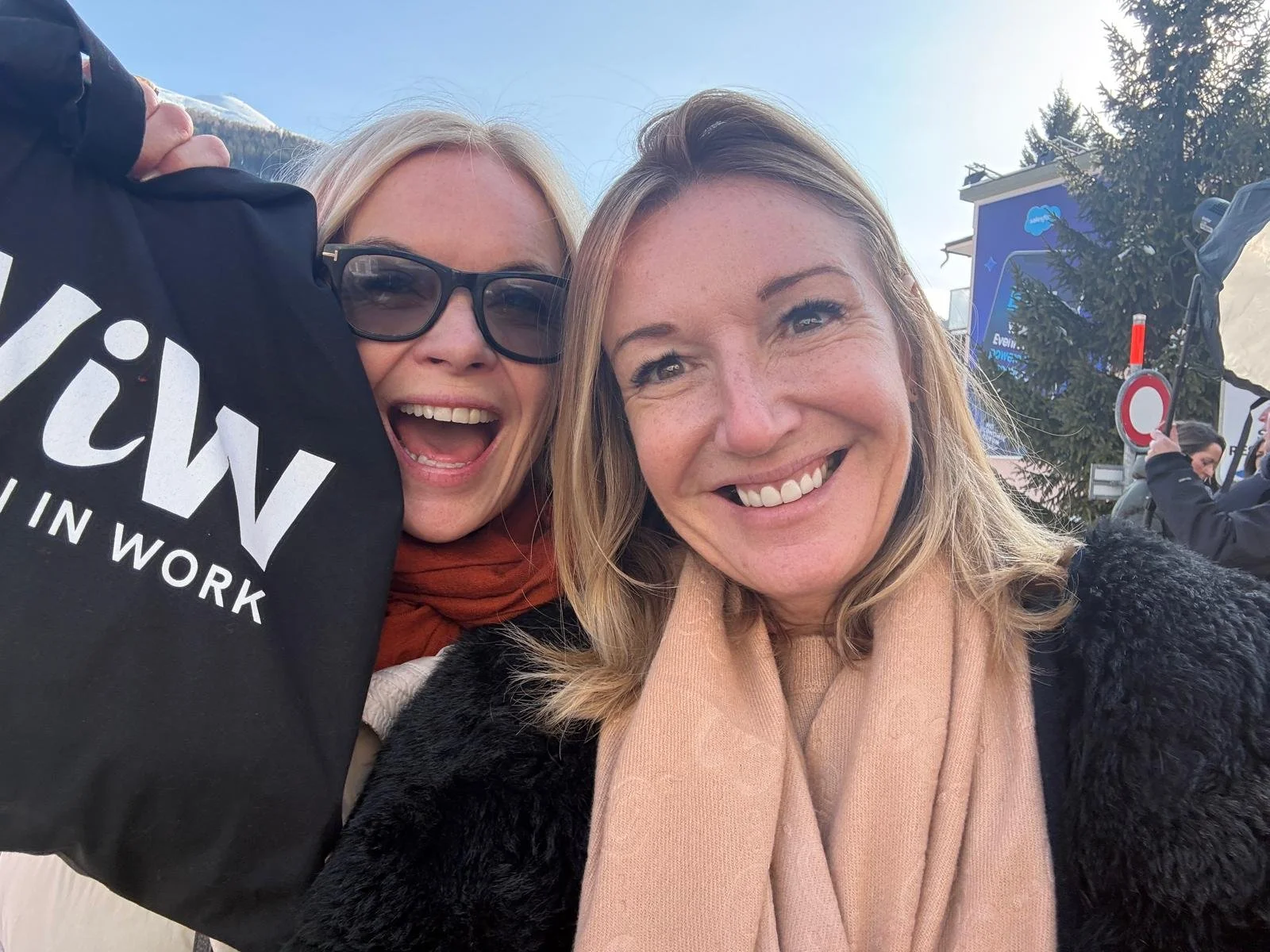
Mariella and I in Davos 2026 - I didn't think that would happen in 1999
And now another enormous transformation is upon us. AI will reshape work again, probably faster than anything we’ve experienced between that afternoon in Trafalgar Square and today. It brings enormous opportunity. But it also gives us a choice: do we carry the inequalities of the old world of work into the new one, or do we use this moment to design something better?
When the next generation looks back in another 27 years, I sincerely hope they’ll find it extraordinary that in 2026 we were still talking about gender pay gaps, motherhood penalties, women disappearing from the workforce in midlife, and so few women reaching the very top.
After all, look how much has changed since 1999.
A lot can change in 27 years. Let’s make sure the things that matter most are among them.
PS. Spoiler alert: we’ve been working hard on some research into what’s changed since the FTSE 100’s first female CEO. Hard to believe that just two years before I stood in Trafalgar Square as a young woman - pre-children, pre-marriage - the index got its first female boss: Marjorie Scardino, who turns 80 next January. Watch this space - we’ll share the report in September.
It’ll also feed into a discussion at our summit: Lord Davies was commissioned by government in 2010 to get more women onto FTSE boards. Fifteen years on, through the Hampton-Alexander Review and now the FTSE Women Leaders Review, boardrooms have been transformed. So what’s actually changed - and what hasn’t?
Come and be part of the movement. https://ti.to/intuitive%20events%20ltd/womeninwork-summit-2026