

Thursday 8th October, Kings Place, London
Fix the foundations. Measure what matters. Embed change.
The Impact Stage is where progress is made visible, and where conversations get practical, personal and participatory. It brought together the leaders, employers, and change makers who are not only talking about change, but delivering it in practice.
Through live examples, applied discussion and shared learning, it explored what happens when leadership is turned into action and good intentions become measurable impact. This is a stage for the organisations, ideas and decisions already helping to reshape work for women in real and tangible ways, designed for those who want to dig deeper into the how of change.
Every session was interactive, with plenty of space to share ideas, ask questions, challenge assumptions and connect with others doing the work. This is not a stage for passive listening. It is a space for real talk, practical tools and fresh thinking you can take back and use.

Impact Stage Host
-
Naomi Kerbel welcomes you to the Impact Stage 2026.
-
Naomi Kerbel is a Director at SEC Newgate, where she leads the firm's leadership communications, preparing senior figures for the moments that shape how they are seen and heard: keynotes, panels, town halls and media appearances.
Equality has run through her work for more than a decade. As a broadcast journalist at Bloomberg, Sky News and CNBC, she produced and presented the equality output for Bloomberg TV, and her podcast, Show Me The Way, profiles women making a difference to the lives of others. She is now developing The Shift, an institute dedicated to elevating the voices of women on the global stage. At Bloomberg she was also Global Head of TV and Radio Scheduling, working between London, New York, Hong Kong and Singapore.
An experienced host and moderator, she has hosted programmes at the World Economic Forum in Davos, UN Climate Summits, Anthropy, New York Climate Week and London Climate Week, and curates programmes designed to move conversations from intention to action.
She is a judge for the Female Entrepreneur category at the Lloyds British Business Excellence Awards and for the Veuve Clicquot Bold Woman Award, and a mentor with Women in Journalism. Naomi began her career on the West End stage, before joining Goldman Sachs as an Associate in Equity Sales, focusing on media and telecoms. A linguist, she studied at the University of Cambridge, where she was a choral scholar, and holds a Master's degree in journalism.
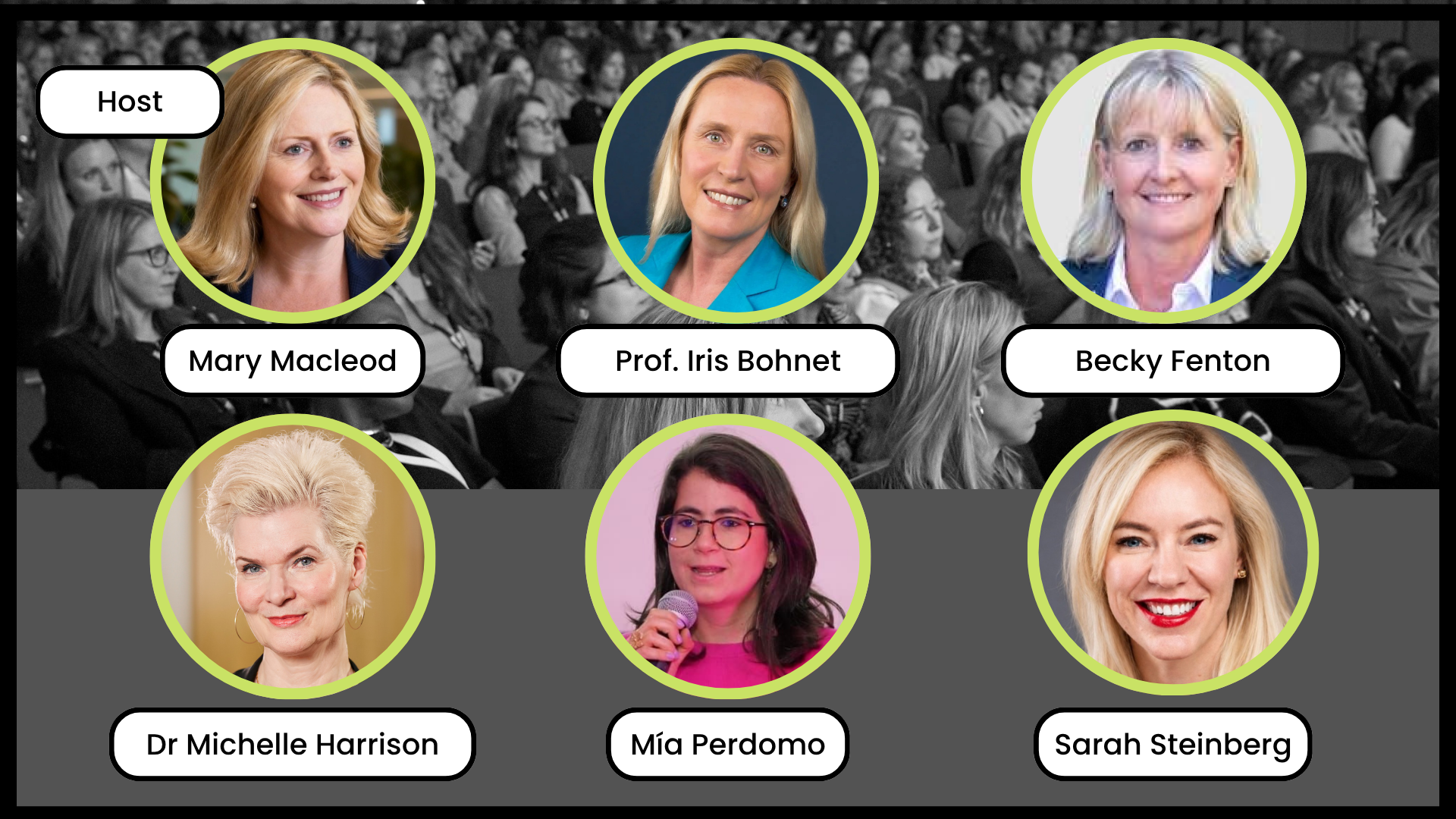
10.20AM | The Future of Work: What’s Actually Working Around the World?
-
The future of work is often discussed as something still to come. But across the world, organisations, governments and researchers are already testing new approaches to leadership, flexibility, technology, progression and workplace culture.
This session asks a more practical question: what is actually working?
Drawing on global data, behavioural science and the experience of businesses implementing change at scale, the panel will explore where meaningful progress is being made for women at work, why some interventions succeed while others stall, and what UK employers can learn from approaches being taken around the world.
From changing attitudes towards women in leadership to redesigning workplace systems and responding to the impact of AI, this conversation will move beyond ambition and good intentions to examine the evidence, action and results.
What can leaders take back to their own organisations? Where should businesses focus next? And how can we make progress happen faster?
-
Mary Macleod is Chair of the Government's Women's Business Council, representing UK business on the G20 Empower Alliance for women's leadership and economic empowerment around the world. She has spent decades championing the role of women in UK growth: as a Member of Parliament, she advised Government Ministers from 2012 on women on boards and the executive pipeline, launched Charters for Women in Aviation, Aerospace and Defence, and established the Women and Equalities Select Committee in Parliament. She is also Patron of the London Women's Forum, driving senior women's progression in financial services.
At work, Mary is Chair of the Global Board & CEO Practice at August Leadership, advising on board and leadership appointments, succession and assessment. She was previously Senior Client Partner at Korn Ferry, and earlier held roles at Accenture, ABN AMRO Investment Bank and NatWest. More recently, she was Chief Executive of The King's Responsible Business Network, producing BITC's annual Times Top 50 gender equality index.
-
Iris Bohnet is the Albert Pratt Professor of Business and Government and co-director of the Women and Public Policy Program at Harvard Kennedy School. A behavioural economist, she combines insights from economics and psychology to improve decision-making in organisations and society, often through a gender and cross-cultural lens. She is the author of the award-winning What Works: Gender Equality by Design and co-author of Make Work Fair. Iris advises governments and companies around the world on embedding equity at work
-
Beccy is KPMG's Global Head of Healthcare and UK Head of Infrastructure, Government & Healthcare. She has spent more than 30 years working with public sector organisations in the UK and internationally, advising governments, healthcare providers and private sector clients. Beccy spent 14 years in the NHS, including a decade as an Executive Board Director. She is passionate about helping clients improve health and care outcomes, combining deep sector expertise with a strong focus on innovation, digital transformation and sustainable performance improvement.
-
Dr Michelle Harrison is the Global President of Verian Group and works as an advisor to governments and corporations around the world to build and deliver better public policy.
She was the Founding CEO of Verian, leading its establishment originally as a division of the Kantar Group, and then its subsequent evolution to a privately owned independent company and the largest specialist public policy consulting business outside of the US. She is Chair of the Verian Institute for Public Impact, and a regular platform speaker and media commentator on issues of geopolitical and social change.
Michelle is the Chair of Demos, the UK’s leading cross-party Think Tank. She sits on the Advisory Board of the Reykjavik Global Forum and is the co-founder of The Reykjavik Index for Leadership, a leading international measure of gender and leadership.
-
Mia Perdomo is the CEO and Co-Founder of Aequales, Latin America’s first corporate DEI consultancy, and PAR Ranking, the region’s largest DEI benchmarking and measurement tool for organizations. Since 2014, PAR Ranking has gathered data from more than 2,400 organizations across 20 countries and helped establish regional DEI standards. Mia is a passionate feminist and an advocate for sexual and reproductive health and rights, serving on the Board of Trustees of the International Planned Parenthood Federation. Her academic background is in psychology, human rights, and business. She has been recognized and awarded by Fast Company, the BBC, MIT Innovation Challenge and Bloomberg. She is a World Economic Forum Young Global Leader.
-
Sarah Steinberg is a global affairs and policy strategy leader focused on the intersection of artificial intelligence, workforce transformation, and economic growth. As Head of Global Public Policy Partnerships at LinkedIn, she leads the company’s engagement with international organizations and strategic global initiatives focused on the future of work and the economic impact of emerging technologies.
Sarah works with governments, business leaders, and global institutions to navigate the workforce transition driven by AI, with a focus on inclusive economic growth, skills, and women’s leadership in the global economy. She leads partnerships across institutions including the World Economic Forum, OECD, and United Nations, helping establish LinkedIn as a trusted source of labor market insights for governments and global institutions navigating economic and workforce transformation.
She is a frequent speaker at major international forums including Davos and the UN General Assembly, where she brings data-driven perspectives to conversations on AI adoption, workforce resilience, and the future of work.
Prior to LinkedIn, Sarah led a $75 million global education initiative at JPMorgan Chase supporting workforce and economic opportunity efforts across ten countries. Earlier in her career, she led workforce policy and research at the Center for American Progress, advancing innovative approaches to skills development and labor market mobility in the United States.
Sarah serves as Vice Chair of the Board of the National Skills Coalition and is an Aspen Institute Economic Mobility Fellow. Her work has been featured in publications including The New York Times, The Wall Street Journal, and The Washington Post.
She holds a bachelor’s degree in government and sociology from Dartmouth College.
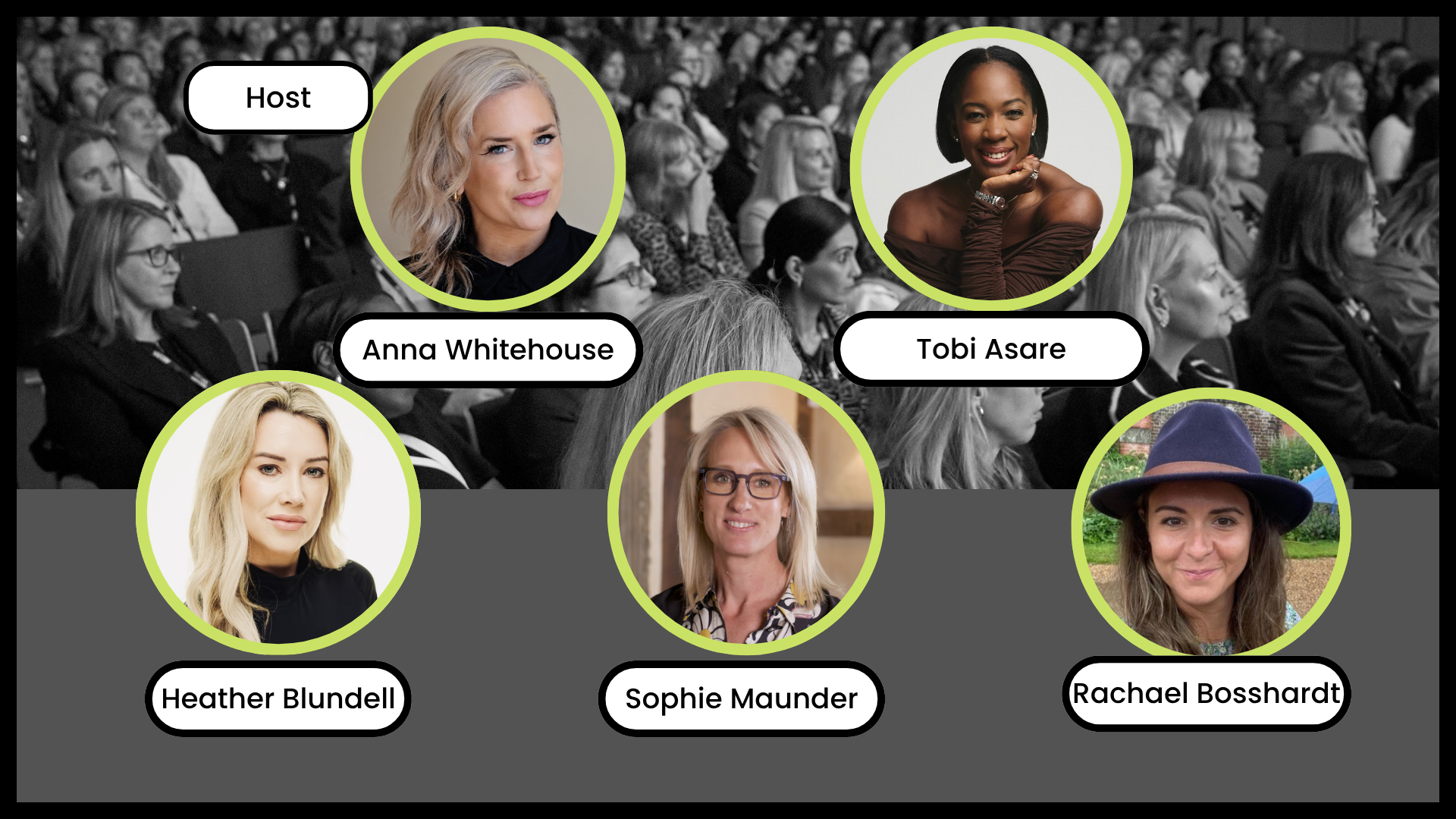
11.30AM | More Than a Comeback: The Return On Investment After Maternity
-
Returning to work after children is about far more than surviving a successful first week back. For many women, it's a defining moment; one that shapes whether they continue to progress, feel visible, rebuild confidence, and stay on a leadership track. This session moves beyond policy and into practice, using scenario-based discussion to examine what genuine support looks like: in conversations with managers, in promotion decisions, in the everyday moments that signal whether someone still belongs on the path they were on. A grounded look at return, retention and progression; and what employers must get right if they want women not just to come back, but to move forward.
-
In 2015, Anna Whitehouse founded Mother Pukka - a platform that became a rallying point for parents navigating the highs and lows of modern-day life. Drawing on her own experiences as a working mother, Anna launched the Flex Appeal campaign to challenge the outdated and inflexible working practices that disproportionately affect women, particularly those with young children. Her call was simple but powerful: flexible working should be the norm, not the exception.
Over the years, Anna’s campaign has evolved into a nationwide movement, culminating in a historic victory in 2024 when the Flexible Working Bill was passed into law. This groundbreaking legislation gives all workers the right to request flexible working from day one and ensures that employers provide greater transparency and fairness for workers across the UK. The new law also allows employees to submit up to two requests per year, making it easier for individuals to manage work-life balance without fear of discrimination.
For Anna, the passing of the Flexible Working Bill was the culmination of years of tireless campaigning, but she remains resolute in her belief that there is still much work to be done. Her advocacy continues to focus on normalising flexible working across industries and ensuring that workplace policies promote inclusivity, equality, and well-being for all.
-
Tobi Asare is the author of The Blend: How to Successfully Manage a Career and Family, the founder of My Bump Pay, and a senior executive. A passionate advocate for working mothers, she created My Bump Pay, an online platform empowering women to break the glass ceiling during pregnancy and beyond.
Previously on the board and senior leadership team of one of the UK’s largest media companies, Tobi now is a Board Advisor.
A mother of two, Tobi has been recognised for her impact on workplace equality, receiving an award from previous Prime Minister Boris Johnson for her work supporting women in the workplace.
-
Heather is the UK CEO of Grayling and has spent more than 15 years advising some of the world's largest companies and brands in the UK and internationally. She is a trusted adviser to business leaders navigating periods of significant change, and a leading UK media expert and commentator. Heather is recognised as one of the industry's most established experts in leading integrated campaigns that help drive trust, reputation, and business growth. She has won seven Cannes Lions, including a Gold Lion for 'Creative Commerce'. In her role as UK CEO, she oversees Grayling's 200 employees in the UK, across nine different offices. Heather is passionate about increasing diversity and inclusivity in the workplace and has placed this front and centre of Grayling's business strategy, delivering work that inspires and motivates, bridges the diversity gap, removes barriers, and empowers individuals. Her desire to create an equitable agency has forged several pioneering partnerships, including Global Purpose Enterprise, PR Mums, Creative Access, Lexxic Neurodiversity Experts, Tommy’s and MeVitae. Heather has also launched six new Employee Resource Groups from diverse backgrounds, experiences, races, sexualities and neurodivergent traits. These groups cover LGBT+, Parenting, Wellbeing and Mental Health, People of Colour, Faith and The Women’s Network.
-
Sophie Maunder is an executive and parental coach with more than 25 years’ experience in strategy, leadership and agency growth.
She began her career on the WPP Fellowship before spending more than 20 years at VCCP, where she became the agency’s youngest and first female partner. Her roles included Head of Planning, Group Strategy Officer, CEO of VCCPme and CEO of VCCP Ignite. She also led the strategy for O2, won the IPA Effectiveness Grand Prix and was named one of Management Today’s “35 Women Under 35.”
Sophie’s passion for parental coaching is rooted in her own experience of navigating a demanding senior executive career while raising two boys as a single mother.
In 2024, she founded MATRI Coaching to help organisations better support parents through leave and return to work, while retaining valuable talent and improving outcomes for employees, managers and businesses.
Unlike traditional one-to-one coaching offers, MATRI combines on-demand content, community and live coaching in a scalable platform designed to reach more employees, support managers and deliver measurable return on investment for businesses.
-
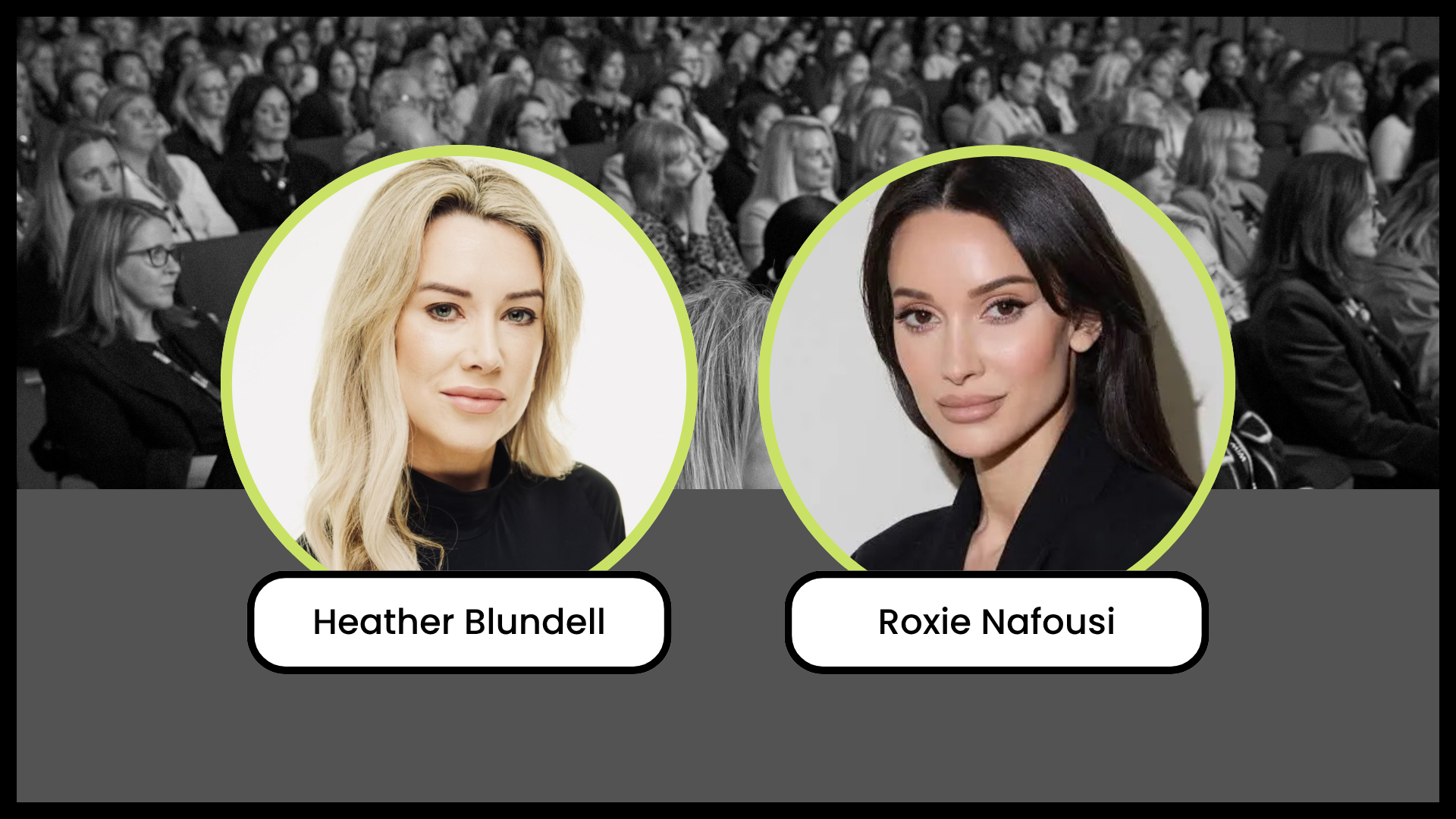
12.25PM | From Ambition to Action: Roxie Nafousi in conversation with Heather Blundell
-
An uplifting and honest conversation about turning ambition into action, with bestselling author Roxie Nafousi and Heather Blundell, CEO of Grayling UK.
Together, they will explore the internal and external barriers that can hold women back, the confidence to take opportunities, and the importance of defining success on our own terms.
Roxie will also share the story behind the global success of her Manifest books, and what she has learnt from building an international career and community.
-
Heather is the UK CEO of Grayling and has spent more than 15 years advising some of the world's largest companies and brands in the UK and internationally. She is a trusted adviser to business leaders navigating periods of significant change, and a leading UK media expert and commentator. Heather is recognised as one of the industry's most established experts in leading integrated campaigns that help drive trust, reputation, and business growth. She has won seven Cannes Lions, including a Gold Lion for 'Creative Commerce'. In her role as UK CEO, she oversees Grayling's 200 employees in the UK, across nine different offices. Heather is passionate about increasing diversity and inclusivity in the workplace and has placed this front and centre of Grayling's business strategy, delivering work that inspires and motivates, bridges the diversity gap, removes barriers, and empowers individuals. Her desire to create an equitable agency has forged several pioneering partnerships, including Global Purpose Enterprise, PR Mums, Creative Access, Lexxic Neurodiversity Experts, Tommy’s and MeVitae. Heather has also launched six new Employee Resource Groups from diverse backgrounds, experiences, races, sexualities and neurodivergent traits. These groups cover LGBT+, Parenting, Wellbeing and Mental Health, People of Colour, Faith and The Women’s Network.
-
Bio coming soon.
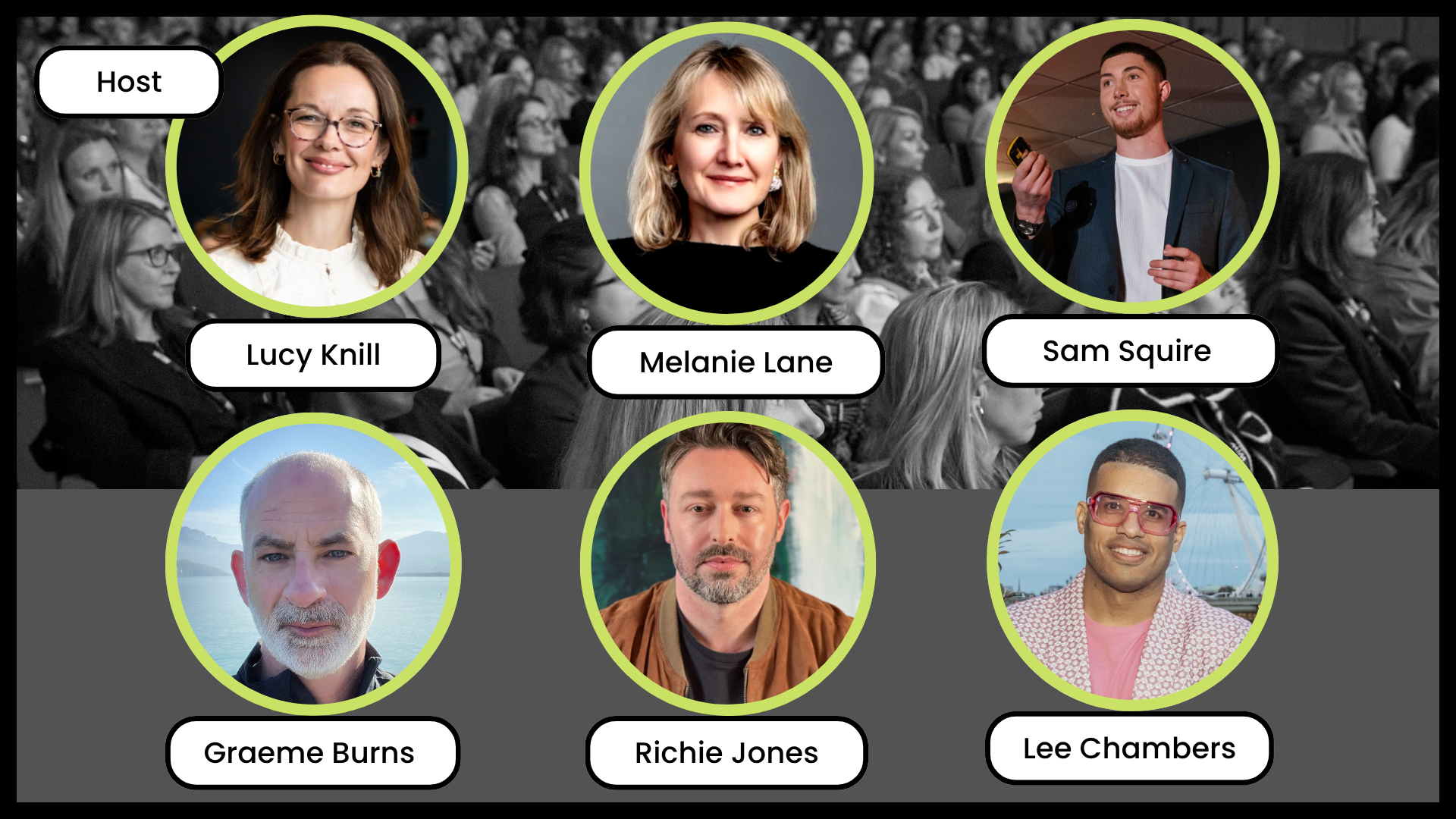
2.05PM | Generation lost? How to fix the broken promise of work for young people
-
Britain's young people are facing a perfect storm. Over a million are not in education, employment, or training: the highest figure in over a decade. AI is reshaping the jobs market faster than policy can respond. And beneath all the economic anxiety, something culturally troubling is simmering: a generation of young men increasingly drawn toward anti-feminist attitudes, while young women push back. In this frank panel John O’Brien, Founder of Anthropy, asks: what does a fair future of work look like in reality, and who gets to have one?
Graeme Burns questions how we harness AI as an equaliser, not an accelerant of inequality?
Lee Chambers asks what happens to boys when male identity gets tangled up in economic irrelevance..
Melanie Lane CEO of Pod, brings a perspective on how employers, educators and policymakers can work together to ensure young people are equipped to thrive.
There are no easy answers. But there is one clear question: how do we make Britain better for generations to come?
-
Lucy is Chief Executive of Anthropy: the UK’s largest gathering of leaders focussed on inspiring a better Britain – one which is more positive, sustainable, equitable and successful. Anthropy convenes 2,000+ leaders to take part in 200+ conversations, led by 600+ speakers across 3 days at the Eden Project. Anthropy facilitates the UK’s largest shared agenda, with hundreds of organisations contributing.
Over 25 years, Lucy has worked with some of the UKs biggest brands including as part of the Omnicom Group and is passionate about the role business can play in collaborating to bring practical solutions to some of the UKs challenges.
-
Melanie Lane is Chief Executive Officer of Pod, a leading EV charging provider with a mission to make electric living easy, affordable, and rewarding. Melanie is leading Pod’s evolution from hardware provider to connected charging services, helping to deliver a more integrated ecosystem that is purpose-built for electrification.
Melanie brings more than two decades of expertise across energy and mobility, including leadership roles at Shell Recharge Solutions. Since beginning her career in international development, Melanie has gained experience working in Australia, Europe, South Africa, and Asia. Beyond her role at Pod, Melanie is also a member of the Board of Trustees at the International Justice Mission and a Founding Partner of Global Women in EV Day.
-
Sam is CEO of Inspire 2 Ignite CIC, leading the mission to Nurture, Equip and Empower young people aged 16 to 24 to Thrive in education, employment and training, serving those who are 'NEET' and redefining what this circumstance means.
Through Inspire 2 Ignite's approach of removing barriers, creating connections, and skyrocketing young people's confidence to achieve their goals, Sam is spearheading the East of England's 3% Club, a collective working to reduce the region's NEET rate to 3% by 2031 (matching the Netherlands who are Europe's best in-class)
In the last decade, Sam has engaged with 15,000+ young people, asked 100,000+ questions, and proved that when young people are Nurtured, Equipped and Empowered, they don't just get by, they Thrive.
-
Graeme Burns runs Mavai Ltd, providing advice and insight to leaders to help them navigate the challenges of AI adoption and runs AI West, a cross-sector community for Bristol and the West, that connects universities, students and business to solve real world issues with AI. He spent the last four years as AI strategy people and comms lead at Nationwide Building Society, planning for the impact of AI on employees and is currently working on the Mayor of London AI and Jobs Taskforce.
Graeme is an advocate for Responsible AI, helping to develop and promote the “AI for social good framework”. He co-authored the CIPD guides on AI for HR Practitioners and contributed to "Good work design and AI adoption" a joint study with the CIPD/Institute for the Future of Work, where he is a Fellow of Practice.
-
Richie Jones is Chief Client Officer at Ipsos in the UK & Ireland and a speaker and writer on culture, masculinity, fandom and class.
He leads Ipsos's work on Modern Masculinities, exploring how brands and media portray men and making the commercial and social case for doing it better. A regular on the Politics JOE podcast, he has spoken across the world on masculinity, culture, how we live now, and how we might live in the next decade.
As CCO, he oversees the commercial direction of Ipsos's private sector business, working closely with some of the world's most ambitious brands on strategy, insight and foresight, and heads up Ipsos's Fandom 2030 programme, which has shaped how major global brands and rights holders think about fan culture.
He sits on the Movember UK Corporate Advisory Board to help drive better engagement with the private sector and is a published fiction writer and visual artist.
-
Lee Chambers is the Founder and CEO of Male Allies UK. After a diverse career, from corporate finance to building and exiting tech company, he is now focused on supporting organisations to engage men in inclusion and promote effective allyship. He has been featured on the Startups 100 Index, has received a Great British Entrepreneur Award, and sits on the board of CMI Women, Regenerage UK and the Manchester Metropolitan University Business School. In 2024, he received the Freedom of the City of London for services to equality in business. He is a Kavli Fellow of the National Academy of Sciences in the USA, the first Black British scientist to be awarded in its 33-year history, received for his work on health inequalities. He is the 2023 UN Women Changemaker of the Year, and is an ambassador for the UK Governments Lilac Review for Disabled Entrepreneurship. He speaks globally on allyship and intersectionality, having taken the stage at One Young World, ChangeNOW and the Bloomberg Global Equality Summit, and is the author of the bestselling book, Momentum: 13 Ways To Unlock Your Potential.
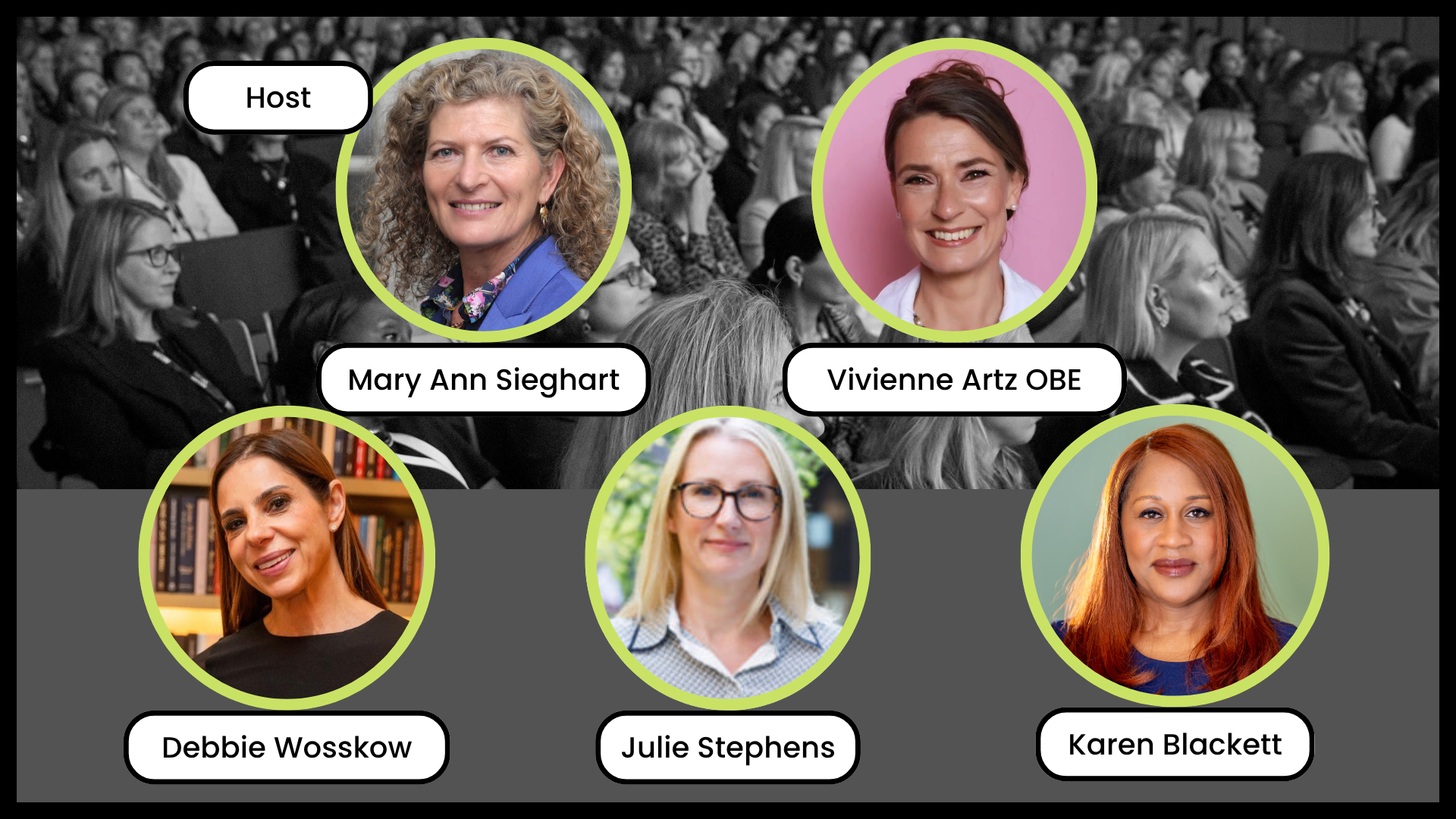
3.15PM | Strengthening the Future Leadership Pipeline: What Leading Employers Are Changing
-
If organisations are serious about more women reaching senior leadership, they have to look closely at the pipeline beneath it: at the points where talented women stall, step back, or are simply overlooked. This interactive session puts that pipeline under the microscope, using group discussion to surface where systems, habits and unconscious assumptions still get in the way, often without anyone noticing. Expect real examples from organisations already shifting their approach, and a practical, solutions-focused conversation about what it actually takes to build stronger, fairer routes into leadership.
-
Author of The Authority Gap, SID and NED on public company boards, TED speaker. Visiting Professor at the Global Institute for Women’s Leadership at King’s Business School, former Assistant Editor of The Times, Lex Columnist at the FT and BBC Radio 4 presenter.
-
Vivienne is the Chief Executive of the FTSE Women Leaders Review, the UK’s business-led voluntary framework, supported by Government to improve the representation of women on the Boards and Leadership teams of the FTSE 350 and 50 of the UK’s largest private companies.
Vivienne is also a portfolio NED and holds a number of expert advisory roles supporting businesses in their data, privacy and digital strategies, with a focus on AI and new technologies, anti-financial crime and equality & diversity. Vivienne has over twenty five years experience in global financial and professional services sectors, including at the London Stock Exchange Group, Refinitiv, Thomson Reuters and Citibank. Vivienne Chairs the AI and Data Advisory Group at the International Business & Diplomatic Exchange, is a member of the Competitiveness Advisory Board for the City of London Corporation, Founder of the PICCASO Awards, Global Coalition to Fight Financial Crime Data Group Chair, Senior Advisor to CIPL and GSS, was chapter co-lead of the City of London “Vision for Economic Growth” report, and has advised UK government on international data transfer strategies.
Vivienne is an exceptional advocate for gender balance in business, is a Patron of Women in Finance Rwanda, and is the former CEO of Women in Banking and Finance. She was awarded an OBE for services to Financial Services and Gender Diversity in 2021.
The FTSE Women Leaders Review, is the UK’s business-led voluntary framework, supported by Government to improve the representation of women on the Boards and Leadership teams of the FTSE 350 and 50 of the UK’s largest private companies.
Vivienne is also a portfolio NED and holds a number of expert advisory roles following a career in global financial and professional services.
-
Debbie is a prolific angel investor and the co Chair of the U.K. government backed ‘Invest in Women Taskforce’. Appointed by the Chancellor, Rachel Reeves, she has raised an initial funding point of £250m to support female powered businesses, the largest in the world. She is the co-founder of WJV, the boutique investment and strategic innovation firm, championing diversity, wellness and economic empowerment and a Founding Advisor to Smart Society Ventures. Debbie is Executive Chair of The Better Menopause, empowering women's performance at midlife through science-backed products. She is a Non Executive Director of Channel 4 and a Senior Advisor to McKinsey & Company. She is the co- Author of the business bestseller ‘Believe, Build, Become - How to Supercharge your Career’ (Penguin 2019). Debbie is a Board Member of The Mayor of London’s Business Advisory Board and The Women’s Prize for Fiction, where she Chairs the Development Board. She is a Former Evening Standard 'Entrepreneur of the Year’ and Author of the 'Wosskow Review on the Sharing Economy' for the UK government (2015) and former Chair of Sharing Economy UK. Debbie was awarded an OBE in June 2016 & received Freedom of the City of London 2019. She graduated with an MA in Philosophy and Theology from New College, Oxford.
-
Bio coming soon.
-
Karen Blackett is a proven turnaround CEO with a 30-year track record in value creation, energising teams, creating vibrant cultures and consistently delivering business growth and success. She is the former UK President for WPP, the world’s largest marketing services group, where she was directly responsible for driving growth in WPP’s second largest
market of 13,000 people, and managing revenue of $2 billion. Karen has extensive multinational experience having previously served as EMEA Chief Operating Officer, with key priority markets being Russia, Turkey, France, Spain, Portugal, Poland, Czech Republic, South Africa and Israel. In 2014, Karen topped The Power List, being the first businesswoman to come in at number 1. As a long-term champion of the Creative Industry sector, Karen has been a Non-Executive Director for Creative UK since 2016. Karen was appointed Chancellor of The University of Portsmouth in 2017, the first Alumna to become Chancellor, and was a former Non-Executive Director of The UK Government Cabinet Office. Karen founded The Black Equity Organisation in 2021, alongside David Lammy MP, David Olusoga OBE, Kwame Kwei-Armah OBE, Ric Lewis and Dame Vivian Hunt. BEO is an independent, national Black civil rights organisation created to dismantle systemic racism in Britain, drive generational change and deliver better lived experiences for Black people across the country. In June 2022, Karen was appointed a Non-Executive Director for Diageo (a FTSE Top 10 company. Karen has been awarded honorary doctorates from The University of Portsmouth, Southbank University, Reading University, Ravensbourne University and is a Fellow of Kings College London. In April 2024, Karen was awarded Freedom of the City of London and received a CBE for Services to Advertising and The Creative Industries in the January 2025 King’s New Years honours. In May 2025, Karen joins The Board of The British Fashion Council.